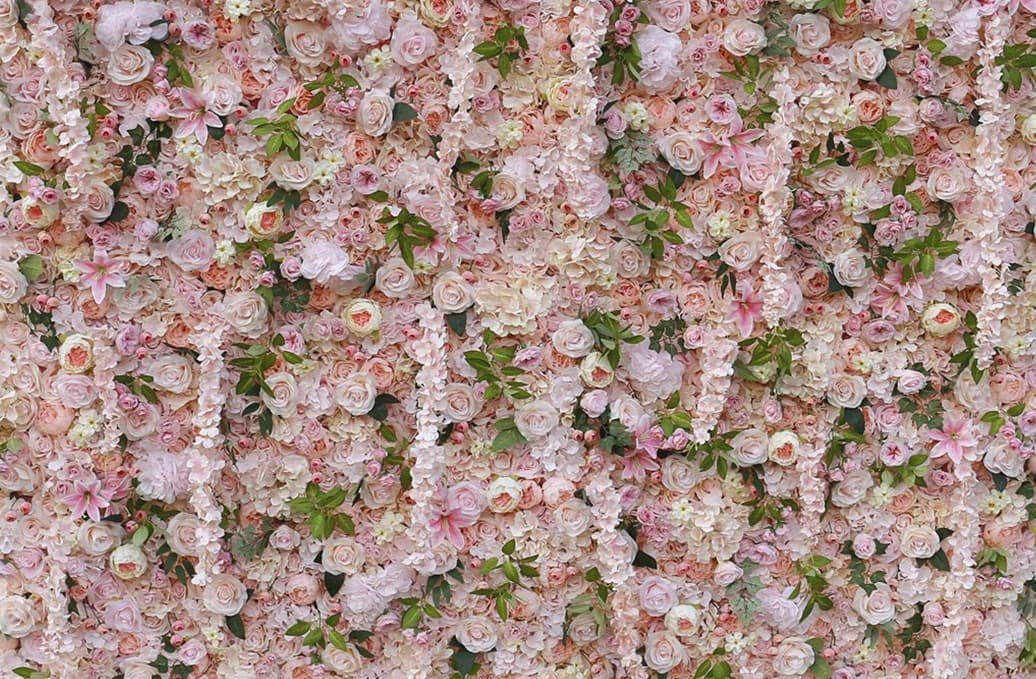
For event planners, decorators, and rental companies, luxury floral designs do not have to rely completely on fresh blooms. The key is strategic placement: reserve fresh flowers for close-up details, and use high-quality artificial flowers for large structures, repeated decorations, and reusable inventory.
When you mix fresh and artificial flowers strategically, B2B buyers can better control product quantities, reduce on-site setup pressure, and deliver a consistent high-end look.
The Golden Rule: Where to Use Fresh vs. Artificial Flowers
For event professionals, it is not about choosing between fresh and faux flowers. It is about knowing where each type works best.
Fresh flowers are better for high-touch, close-up details. Premium artificial flowers are better for large structures, elevated designs, and repeated elements. This mindset should also guide purchasing: look beyond style, and source inventory based on setup location, viewing distance, transport, and reuse value.
| Wedding Area | Better Choice | Why It Works |
|---|---|---|
| Bridal bouquet | Mostly fresh + real touch accents | Close-up photos need soft texture and natural movement. |
| Groom boutonniere | Fresh flowers | This area is seen very closely in photos and greetings. |
| Table centerpieces | Artificial base + fresh top layer | The base stays consistent across many tables, while fresh flowers add detail. |
| Wedding arch | Artificial base + fresh focal flowers | Large volume is easier to prepare, transport, and reuse. |
| Flower wall | Artificial base + fresh accent areas | The wall stays reusable, while fresh flowers highlight the photo area. |
| Aisle flowers | Mostly artificial | Repeated units are easier to pack, move, and install quickly. |
| Hanging installations | Mostly artificial | Lighter materials are safer and easier to install overhead. |
| Entrance decor | Artificial base + fresh details | Large visual impact can be created with less fresh flower handling. |
For B2B buyers, this table can work as a purchasing guide. Core rental items like arches, flower walls, and hanging installations should be sourced for durability, easy transport, and repeated setup.
A seamless setup usually starts with the artificial base. During final styling, decorators simply add fresh flowers to high-visibility focal points, such as eye-level corners, table surfaces, and photo spots.
This helps prevent over-ordering fresh stems for low-visibility areas and makes inventory planning, storage, and event-day setup easier to manage.
Why Mixed Florals Work for Event Businesses
For decorators and rental companies, mixing fresh and artificial flowers is more than a styling choice. It is also a practical way to simplify purchasing, preparation, and on-site execution.
Better Budget Control
The goal of luxury design is not using fewer flowers, but using them strategically.
Fresh blooms can be reserved for bouquets and close-up focal points. Artificial flowers can build the main volume and structure of arches or backdrops.
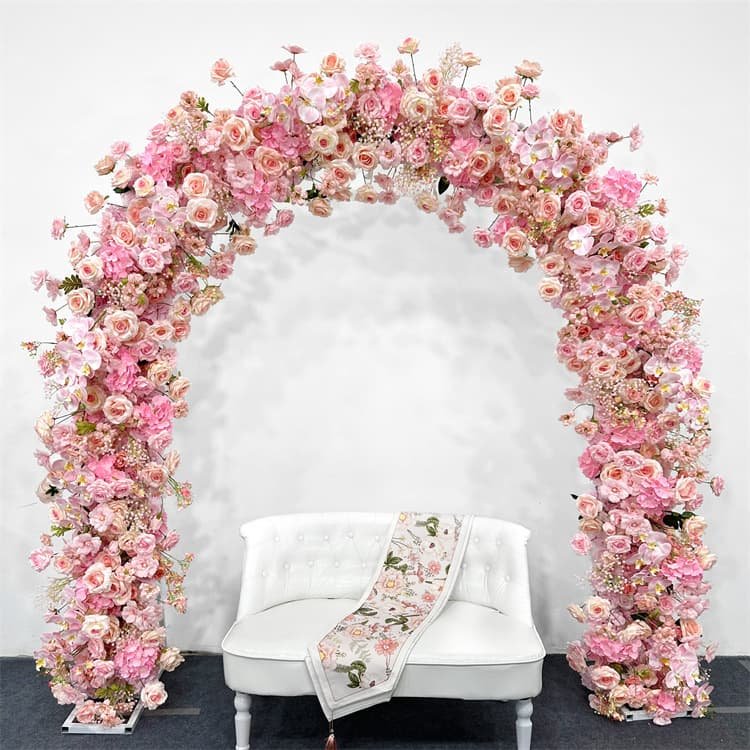
For example, a wedding arch may require many roses, hydrangeas, and greenery. Using artificial flowers for the base keeps the shape full and stable. Fresh flowers can then be added only to the front-facing areas.
For a deeper cost comparison, see our guide to fresh vs. artificial flowers for event businesses.
Less Event-Day Setup Pressure
Fresh flowers often need strict temperature control, hydration, and last-minute handling. This adds pressure to large setups.
Artificial structures like flower walls and aisle markers can be prepared and packed before the event day. The setup team can install the artificial base first, then add fresh floral accents during final styling.
For buyers, this means products should not only look good in photos. They should also be easy to pack, move, install, and adjust on site.
A More Reusable Inventory
Mixed designs help event companies scale more efficiently.
A premium artificial arch, flower wall, garland, aisle flower set, or table base can be restyled with different fresh flower accents for different client themes.
When sourcing these products, buyers should prioritize durability, color consistency, and structural strength so the inventory can handle repeated setup and removal.
For more ideas on building long-term floral inventory, read our guide to reusable wedding flowers for event decorators.
How to Match Artificial Flowers with Your Fresh Floral Plan
When mixing materials, artificial flowers should not be chosen in isolation. They should support the fresh floral recipe from the beginning.
Build Volume, Do Not Compete
Use the fresh flower recipe as the baseline. The goal is harmony, not exact replication.
Fuller artificial blooms, such as hydrangeas, can build the base structure for backdrops and arches. Fresh focal flowers, such as orchids or garden roses, can then be reserved for high-visibility areas.
Match by Color Family, Not Species
You do not need a strict one-to-one flower match. A fresh peony can pair with a faux rose if the undertones, softness, and size feel consistent.
Pay close attention to subtle shades like ivory, blush, and champagne. These colors can change under venue lighting. Always compare faux samples with the fresh floral mood board before confirming a bulk order.
Prep the Base Early
Order and assemble artificial base elements, such as panels, garlands, and arch structures, before the event week.
This gives the team time to check volume, quality, color, and installation method, reducing pressure during the final setup period.
Ask for Project-Based Matching
Instead of guessing from a catalog, send your supplier mood boards, fresh flower lists, and setup sketches.
Ask for project-based recommendations to make sure the artificial products will blend with the wedding color palette and venue design.
Scene-by-Scene Guide: How to Mix Fresh and Faux
For B2B buyers, sourcing floral inventory by wedding area is more practical than ordering by flower type alone.
- Bridal Bouquets: Since these are photographed up close, fresh flowers should lead the design. Use premium real touch flowers sparingly to add volume, support the shape, or replace out-of-season stems.
- Table Centerpieces: For large banquets, build the base with artificial flowers and add fresh blooms to the top visible layer. This helps keep tables consistent and speeds up preparation.
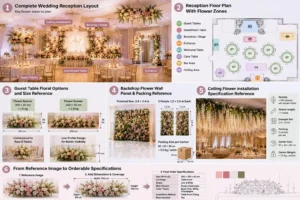
- Wedding Arches and Backdrops: Use artificial flowers to build the main structure and volume. Add fresh blooms to eye-level focal points. Some foam-base arch flowers are packed in labeled pieces and installed with zip ties, which makes transport and on-site assembly easier. When sourcing these pieces, prioritize easy installation and reuse.
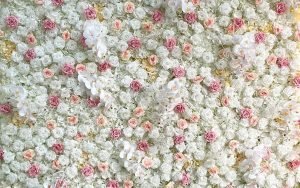
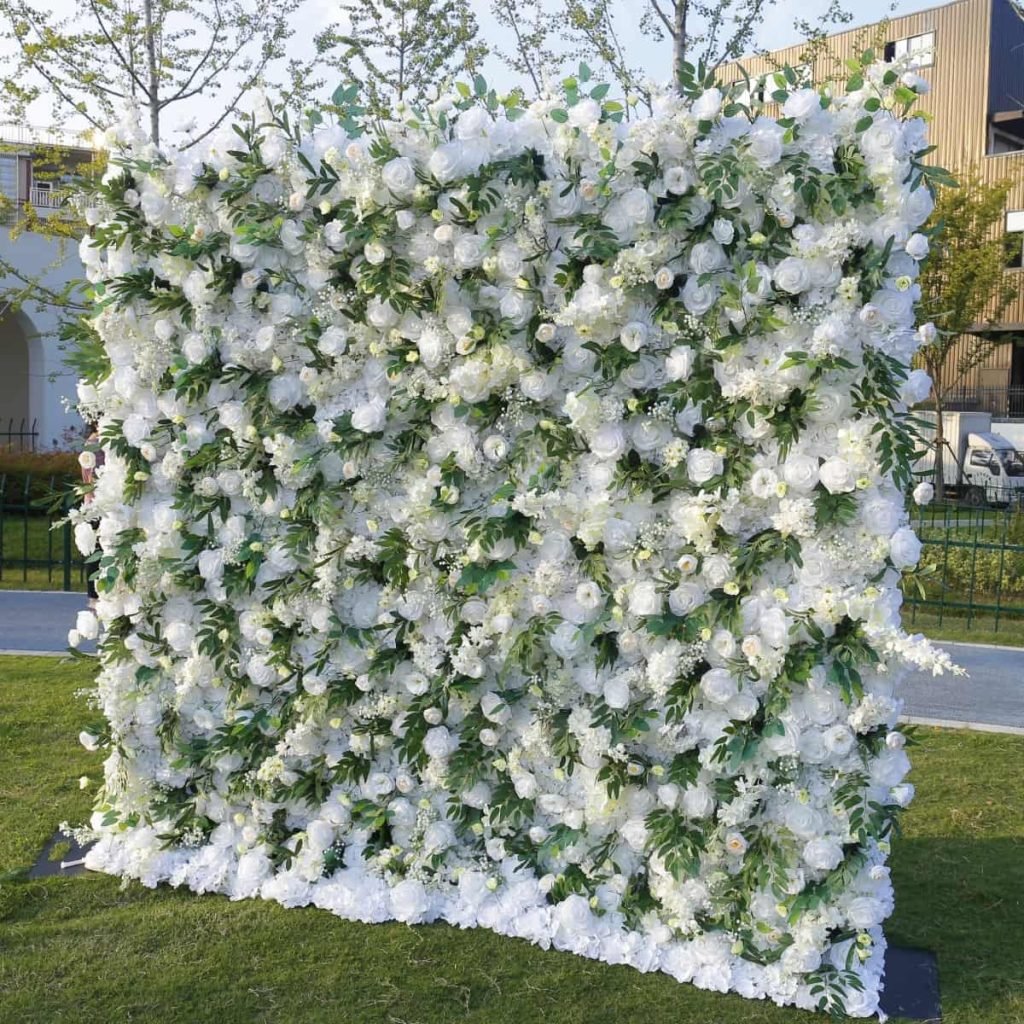
- Flower Walls and Photo Areas: Faux walls provide durable, large-scale coverage. Fresh flowers can be added around logos, names, or central photo zones. Buyers should also confirm the backing type. Grid flower walls are often ordered by 60 × 40 cm panels, while fabric-backed walls are usually calculated by square meter.
- Aisle Decorations: Use artificial flowers for repeated aisle markers. Add fresh accents only to the first rows or the main entrance. Choose lightweight designs for quick setup and removal.
- Hanging Installations: Overhead designs are usually better with artificial flowers. Faux greenery and wisteria reduce installation difficulty and avoid heavy water-based mechanics.
Professional Setup Tips for a Seamless Blend
A seamless mixed floral design depends on both product choice and on-site execution. B2B buyers should consider fixing methods, stem flexibility, and backup supplies before the event day.
- Use Greenery as a Visual Bridge: Greenery such as eucalyptus, ruscus, or hanging vines helps blend fresh and faux materials while softening structural edges. Avoid overly shiny or stiff artificial greens.
- Focus Fresh Blooms Strategically: Do not spread fresh flowers evenly. Place them in high-visibility areas, such as arch corners, centerpiece tops, sweetheart tables, and photo spots.
- Conceal the Mechanics: Exposed zip ties, wire, or floral foam can make the setup look unfinished. Choose artificial products that are dense and easy to adjust.
- Stage the Setup: Install the artificial base first. Leave space for the styling team to add fresh flowers during final detailing.
- Pack Backup Stems: Bring extra loose stems, leaves, and filler flowers to patch gaps, adjust colors, or replace crushed blooms on site.
Sourcing Wholesale Artificial Flowers for Mixed Designs
For B2B buyers, sourcing faux flowers is not about picking random styles from a catalog. The artificial inventory should match the fresh floral recipe, fit the venue setup, and support repeated use.
What to Check Before Ordering
Look beyond appearance. Prioritize material quality, color consistency, stem flexibility, and product density.
For large items like arches and flower walls, also check packing size, carton details, and whether the structure is easy to install, dismantle, and store.
What to Ask Your Supplier
A reliable supplier should offer project-based guidance, not just sell single units. Ask:
- Can I see real product videos or order samples before buying in bulk?
- Are the items from the same color production batch?
- How are large structures packed for shipping and storage?
- What are the carton size and dimensional weight?
- Are these products suitable for repeated event setups?
Small and Custom Orders
Testing with a small order is useful before building a larger inventory.
UIMI supports small quantity orders for standard products. Standard flower walls, wedding arches, and similar ready-made designs can start from one piece. For custom colors, sizes, or floral combinations, buyers can contact UIMI to confirm production details based on the project needs.
Common Mistakes When Mixing Fresh and Artificial Flowers
Mixed floral designs only look high-end when planned carefully. For B2B buyers, many problems happen during purchasing, long before the event day.
- Buying Low-Quality Faux Flowers: Cheap artificial blooms can make fresh flowers look less natural, especially in close-up photos. Always check real videos or samples instead of relying only on edited catalog images.
- Mixing Too Many Flower Types: Too many flower styles can make the setup look messy. Stick to two to four main flowers, such as roses, hydrangeas, orchids, and peonies.
- Ignoring Venue Lighting: Artificial colors can shift under warm lighting, sunlight, or camera flash. Test sensitive shades like ivory, champagne, and blush before confirming a bulk order.
- Overlooking Packing and Transport: Large items like arches and walls can arrive crushed if packed poorly. Artificial flowers are often lightweight but bulky, so buyers should check carton size and dimensional weight, not only actual weight.
- Skipping the Sample Phase: Samples help buyers test density, stem flexibility, and color matching against the fresh flower mood board.
Final Thoughts: Luxury Lies in Strategy and Execution
Mixing fresh and artificial flowers is not a shortcut. It is a practical strategy for event professionals.
Fresh blooms are best for close-up details. Premium artificial flowers are better for large structures, stable volume, and reusable inventory.
For B2B buyers, purchasing should go beyond appearance. Source products based on how easily they install, how well they blend with fresh floral recipes, and how often they can be reused. For a broader sourcing plan, you can also read our guide to wholesale artificial wedding flowers for decorators.
A strong artificial base allows decorators to place fresh flowers only where they create the highest visual impact. This keeps luxury wedding events beautiful, practical, and easier to manage.
Ready to scale your event business with a highly profitable, reusable floral inventory?Contact UIMI today to consult with our B2B specialists. Whether you need to request physical material samples, discuss custom mood board matching, or test our superior quality with a low-MOQ trial order, we are here to help you build your ultimate luxury collection.
FAQ
Can you mix fresh and artificial flowers for luxury weddings?
Yes. Use fresh flowers for close-up details and high-quality artificial flowers for large structures like arches, flower walls, and hanging installations.
Where should fresh and artificial flowers be used?
Fresh flowers work best for bouquets, boutonnieres, table details, and focal points. Artificial flowers are better for arches, flower walls, aisle decor, entrance decor, and reusable table bases.
How can artificial flowers blend with fresh flowers?
Match the color palette, flower size, and overall style. Always compare samples under similar event lighting.
What should B2B buyers check before ordering?
Check material quality, color consistency, density, packing size, installation method, and reuse potential.
Should event businesses order samples first?
Yes. Samples help check color, texture, density, and whether the flowers match the fresh floral plan.
Does UIMI support small orders?
Yes. UIMI supports small quantity orders for standard products. Flower walls and wedding arches can start from one piece.